

 Chinese (China)
  English
  Arabic
  Bulgarian
  Chinese (Taiwan)
  Chinese (Hong Kong)
  Czech
Czech  Danish
  Dutch
Dutch  Estonian
  Finnish
  French
  Greek
Greek  German
  Hungarian
  Indonesian
  Italian
  Japanese
  Korean
  Latvian
  Lithuanian
  Polish
  Portuguese
  Romanian
  Russian
  Slovak
  Slovenian
  Spanish
  Swedish
  Turkish
  Ukrainian
  Vietnamese
 行业新闻
How Can You Ensure Balanced Composition When Using Wide Angle Lenses?
Wide angle lenses are one of the most common types of photographic lenses. They offer a wide field of view and strong perspective, but are prone to distortion. Therefore, certain techniques and precautions are necessary when shooting with them. So, how can you ensure balanced composition when using a wide-angle lens?
When shooting with a wide angle lens, ensuring a balanced composition is crucial, and this requires some practical methods and techniques:
1.Clearly define the subject and simplify the background
Wide angle lenses capture a large amount of environmental elements, requiring a strong visual focal point to attract attention while avoiding a cluttered or empty frame and simplifying the background.
Therefore, when shooting, it’s necessary to clearly define the subject and get close to it, utilizing the exaggerated perspective of the wide angle lens to make it stand out and create impact, becoming the undeniable visual center and thus stabilizing the composition.
2.Keep the horizontal line stable
Wide angle lenses are very sensitive to tilt; even a slight tilt will be magnified at the edges of the frame, creating a strong sense of instability. Therefore, when shooting with a 广角镜头, it’s crucial to keep the center of the frame level and vertical to avoid image distortion. If the image includes a horizon, be sure to keep it horizontal to ensure a stable composition.
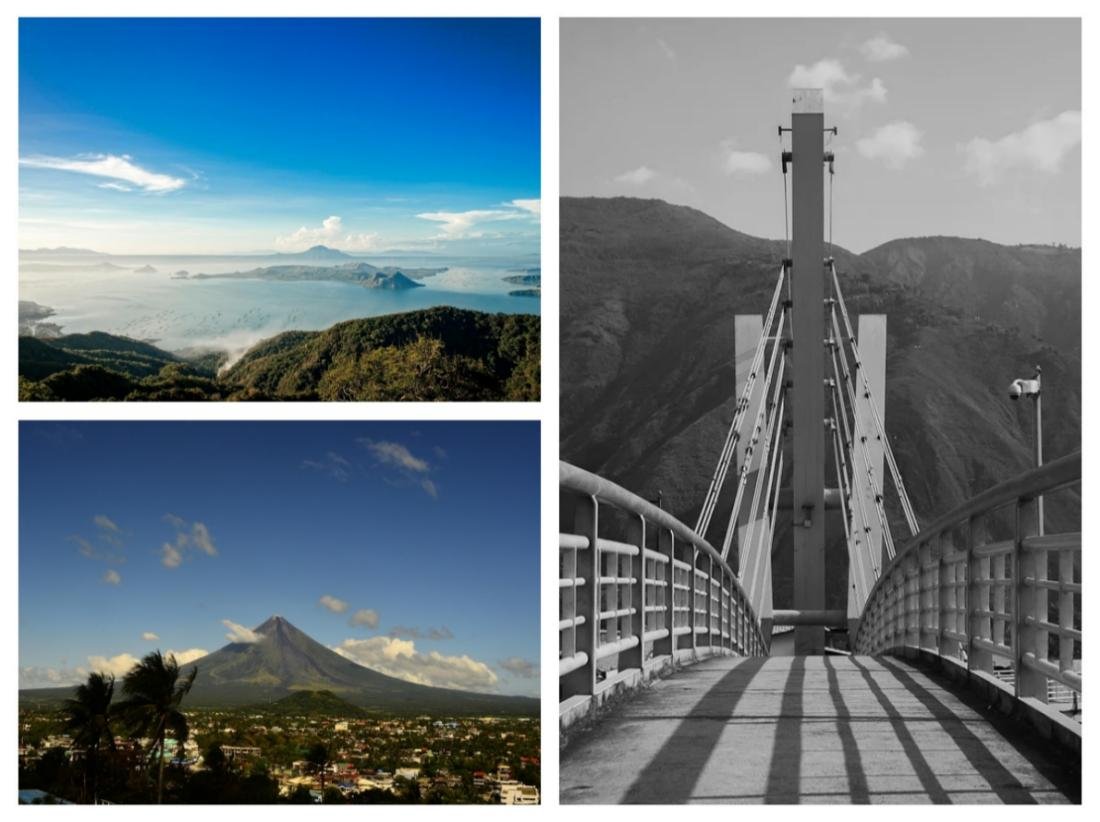
3.Apply composition rules flexibly
Master the compositional principles of wide-angle lens photography and apply them flexibly.
For example, using the central composition method, the subject can be placed in the center of the frame to directly attract attention, which is suitable for scenes that emphasize visual impact, such as close-ups of people or upward shots of buildings; using the leading lines composition method, the lines of buildings can be used as leading lines to guide the viewer’s gaze deeper into the frame, enhancing the sense of depth and layering; using the rule of thirds composition, foreground elements can be placed in the lower third of the frame, and background elements in the upper two-thirds, creating a stable and layered image.
4.Adjust the shooting angle appropriately
Wide angle lenses encourage breaking away from conventional perspectives and finding unique angles to present familiar subjects. During shooting, it’s sometimes necessary to adjust the shooting angle according to the scene.
For example, using a low angle, crouching down or even lying on the ground to shoot, can greatly emphasize the foreground, making ordinary objects appear larger, the sky more expansive, and adding dramatic effect; using a high angle, shooting from above, can better showcase the layout and patterns of the scene.
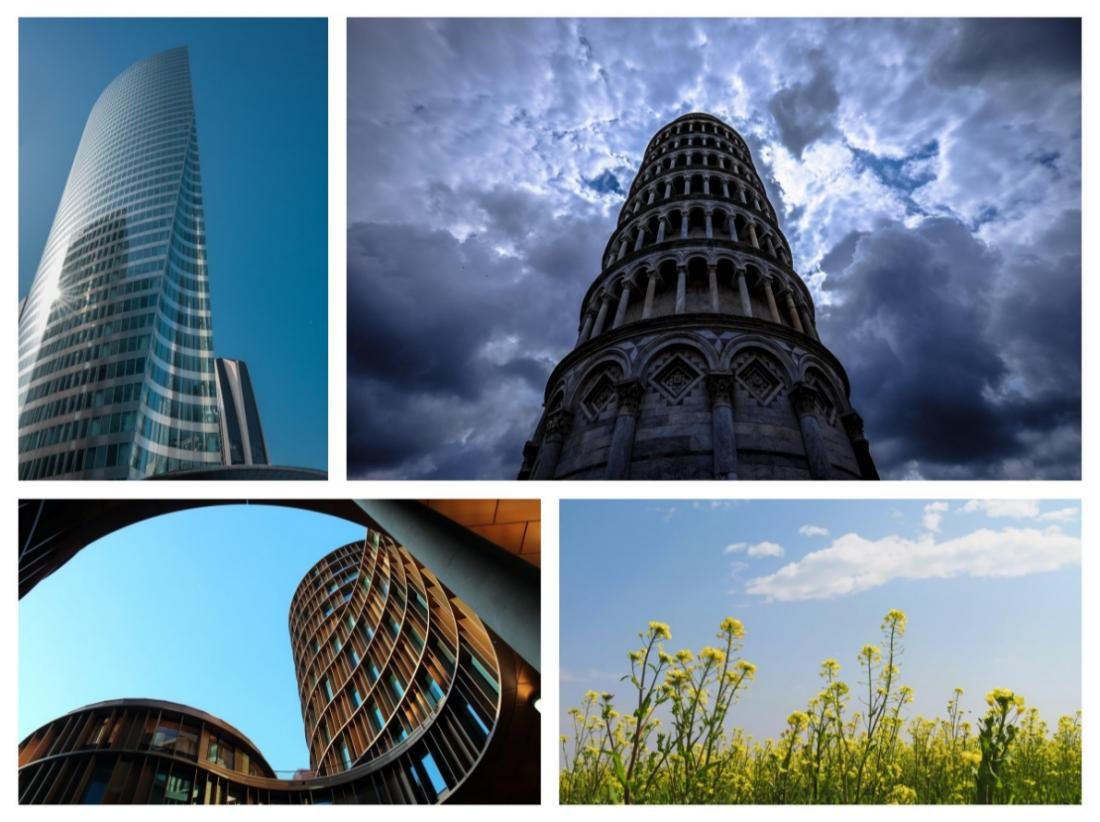
5.Arrange the foreground, middle ground, and background appropriately
Wide angle lenses can capture more scene elements and enhance the sense of depth and three-dimensionality in an image by appropriately distributing the foreground, middle ground, and background.
Shooting close to foreground elements will make them appear larger in the frame due to the perspective effect of a wide angle lens. Moving away from foreground elements will make the proportion of the foreground and background in the image more harmonious.
For example, choosing flowers or architectural lines as the foreground can guide the viewer’s gaze into the depth of the image, preventing the picture from appearing empty; placing people or iconic buildings in the middle ground as a visual focal point can strengthen the interaction between the subject and the environment through the perspective characteristics of a wide-angle lens; using the sky or mountains as the background can expand the sense of space. If the clouds in the sky are prominent, their proportion can be increased; if the sky is plain, its proportion can be reduced.
6.Consider symmetry and balance
Wide angle lenses are ideal for capturing grand, symmetrical scenes such as church interiors, bridges, and reflective water surfaces. Placing the subject in the center of the frame and utilizing symmetrical composition creates a sense of solemn balance.
In cases of asymmetrical balance, the visual weight (size, brightness, color) of foreground elements can be used to balance the relatively lighter elements in the background. For example, a large rock in the lower left corner of the frame can balance a distant mountain in the upper right corner.
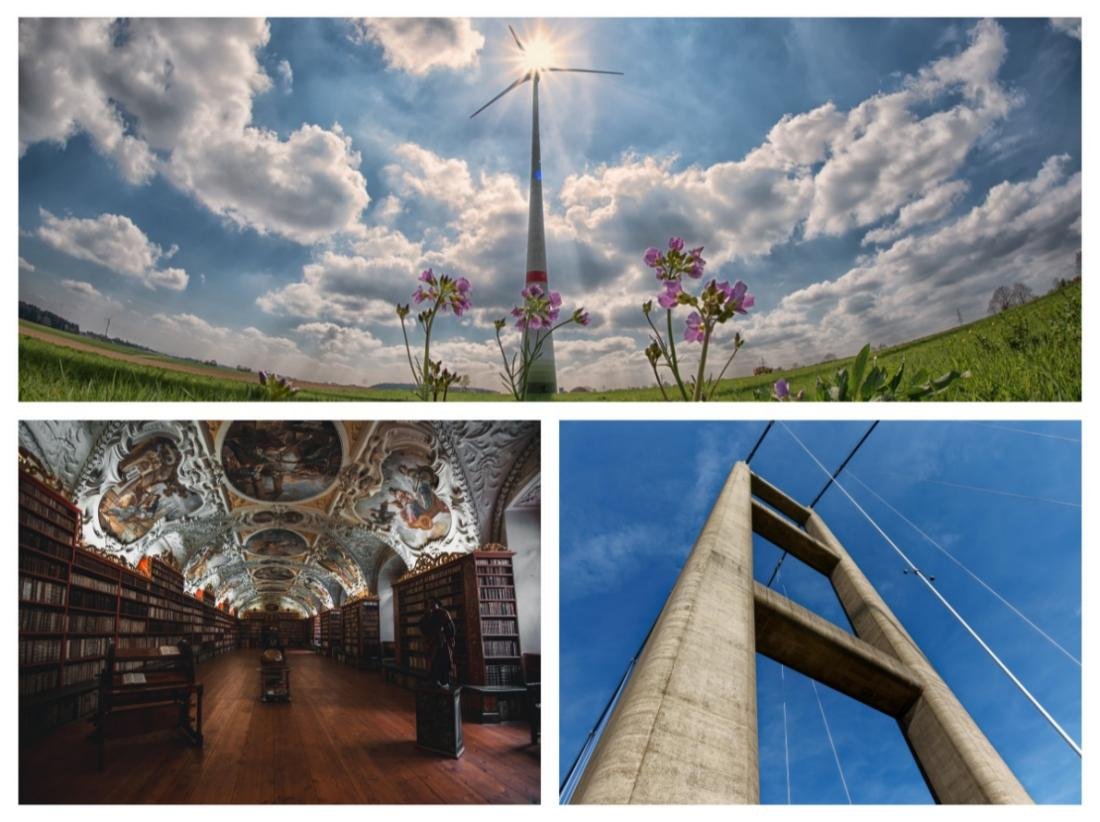
7.Pay attention to the edges of the image
The edges of a wide angle lens are where distortion and distracting elements are most likely to appear. Before shooting, be sure to carefully scan all four corners and edges of the frame for distortion or unwanted objects, such as people’s feet, tree branches, or clutter. Sometimes, the edges can also be used to extend important leading lines or framing elements into the corners.
In addition, if the ratio of the foreground to the background is not ideal during shooting, it can be adjusted through post-production cropping. Post-processing software can also adjust the perspective of the photo, making the building lines more vertical, which can also help balance the proportion between the foreground and background.
We believe that by using the methods and techniques described above, photographers can effectively ensure balanced composition when shooting with wide angle lenses, resulting in photographs that are more visually impactful and well-balanced.
