

 Korean
  English
  Arabic
  Bulgarian
  Chinese (China)
  Chinese (Taiwan)
  Chinese (Hong Kong)
  Czech
Czech  Danish
  Dutch
Dutch  Estonian
  Finnish
  French
  Greek
Greek  German
  Hungarian
  Indonesian
  Italian
  Japanese
  Latvian
  Lithuanian
  Polish
  Portuguese
  Romanian
  Russian
  Slovak
  Slovenian
  Spanish
  Swedish
  Turkish
  Ukrainian
  Vietnamese
 업계 뉴스
22 Landscape Photography Tips Suitable For Beginners
What makes landscape photography so beautiful? Believe it or not, it’s not just about those stunning sunsets or vibrantly colored trees, but about knowing how to make the most of your camera.
In this article, you’ll learn why smartphones and small digital cameras often fail to capture the full beauty of the outdoors, and how to take the breathtaking landscape photos you typically see online or in galleries.
1.What is landscape photography?
Landscape photography is the practice of capturing natural or outdoor scenes in a skillful or striking way to attract the viewer’s eye and attention.
Landscape photography is one of the most popular types of photography. While exploring and traveling, we are easily captivated by beautiful scenery. By learning to photograph landscapes effectively, we can transform unforgettable experiences into beautiful works of art. Although landscape photography is often associated with nature photography, in many cases, urban landscapes can also be considered landscapes.
Landscape photography doesn’t necessarily require a horizontal composition. In fact, there is a common misconception that landscape photos should not be taken vertically. Every scene has its unique elements that dictate the perspective, camera settings, and techniques needed to capture the most compelling image.
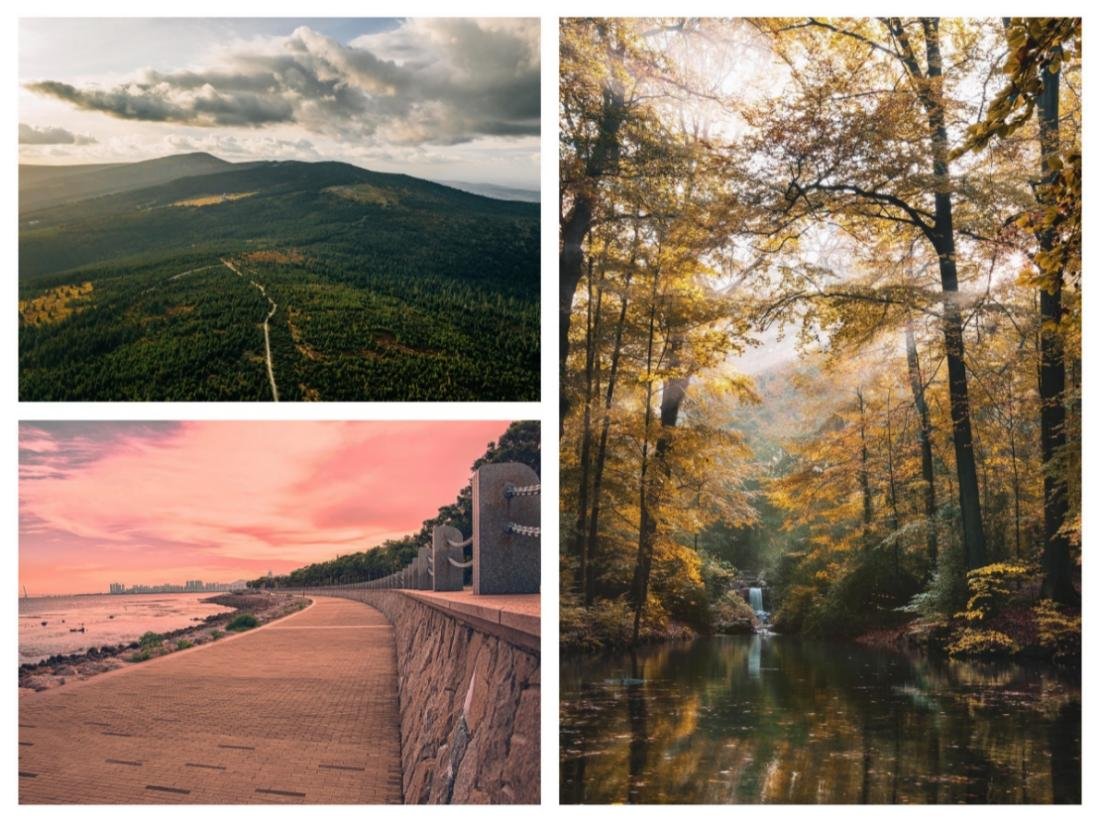
As with all types of photography, taking great landscape photos requires careful consideration before pressing the shutter button. Let’s take a look at the techniques needed to improve your landscape photography skills.
2.Top landscape photography techniques suitable for beginners
(1)Use a good camera
The ideal cameras for shooting landscapes (and most types of scenery) are digital SLR cameras and mirrorless cameras. While today’s most advanced smartphone cameras can take fairly good landscape photos, their quality is still far inferior to that of professional cameras.
Digital SLR cameras and mirrorless cameras are suitable for landscape photography not only because they have larger, more advanced sensors that can capture higher-quality images, but also because they offer more settings that allow you to fully customize the exposure of your photos.
If you don’t already own an entry-level camera, there are many affordable options available on the market. However, for the best results, it’s recommended to choose a full-frame camera with a 35mm sensor. This will allow your lens to provide the widest possible field of view.
(2)Equip a good lens
Equip your camera with a compatible lens specifically optimized for landscape photography. You’ll need a wide-angle lens, which provides a wider field of view, allowing you to capture more of the scene. Wide-angle lenses have shorter focal lengths (35mm and below), but landscape photography enthusiasts often opt for ultra-wide-angle lenses with focal lengths shorter than 24mm.
Using lenses shorter than 24mm will produce a wider field of view, sometimes with some distortion. Some photographers dislike this effect, so it’s best to understand whether a particular lens is suitable for you and your camera before purchasing it.
Keeping your lens clean is also very important. A dirty front lens element can shorten the lifespan of important lens coatings and negatively affect image quality. Knowing how to clean your camera lens is crucial and a fundamental skill that all photographers must learn.

(3)Invest in a good tripod
Many landscape photographers shoot handheld, believing their photos will be sharp enough, but they are often disappointed when the details are magnified. Therefore, one of the most important pieces of equipment for landscape photography is a tripod, which helps minimize camera shake and prevent blurry photos, especially when using slower shutter speeds. A tripod also allows you to use a low ISO in darker environments, avoiding noise.
It’s important to note that you shouldn’t just buy any cheap tripod. For this type of photography equipment, you need to find the tripod that best suits your needs – it should be sturdy and stable enough to support your camera even in windy conditions, while also being lightweight so it doesn’t become a burden when traveling.
One more thing to remember: when shooting outdoors, you won’t always be able to set up your tripod on a flat surface. Sometimes you’ll need to place it on rocks or soft grass, so look for a tripod with spiked feet and rubber covers.
(4)Understand the basics of manual exposure
This is one of the most important techniques you’ll learn in landscape photography and indeed in photography in general. Set your DSLR or mirrorless camera to manual mode and familiarize yourself with the exposure triangle: shutter speed, aperture, and ISO. Each parameter is measured numerically and affects the amount of light entering the lens.
The following is the basic description of each content:
Shutter speed: Determine how fast or slow the shutter closes after the shutter button is clicked to end the image capture.
Aperture: A theoretical value expressed as an f-number or “aperture,” used to determine the size of the lens aperture opening, regulating the amount of light entering the lens and affecting the depth of field.
ISO level: Measures the camera’s sensitivity to available light.
The camera allows you to adjust these three settings, and the right combination will help you achieve the correct exposure. Therefore, whether you want to take snapshots during the day or capture stunning cityscapes at night, once you understand how these three settings work and how they interact, you’ll be able to find the right settings.
(5)Find good lighting
Thanks to manual camera controls, you’ll have greater freedom when shooting in different lighting conditions. Nevertheless, the sun will still be the main light source, so you need to schedule your shoots for times when the light isn’t too harsh, as soft, diffused light helps to reveal the true tones of colors and makes photos look more natural. Especially in landscape photography, mastering the use of natural light requires repeated practice.
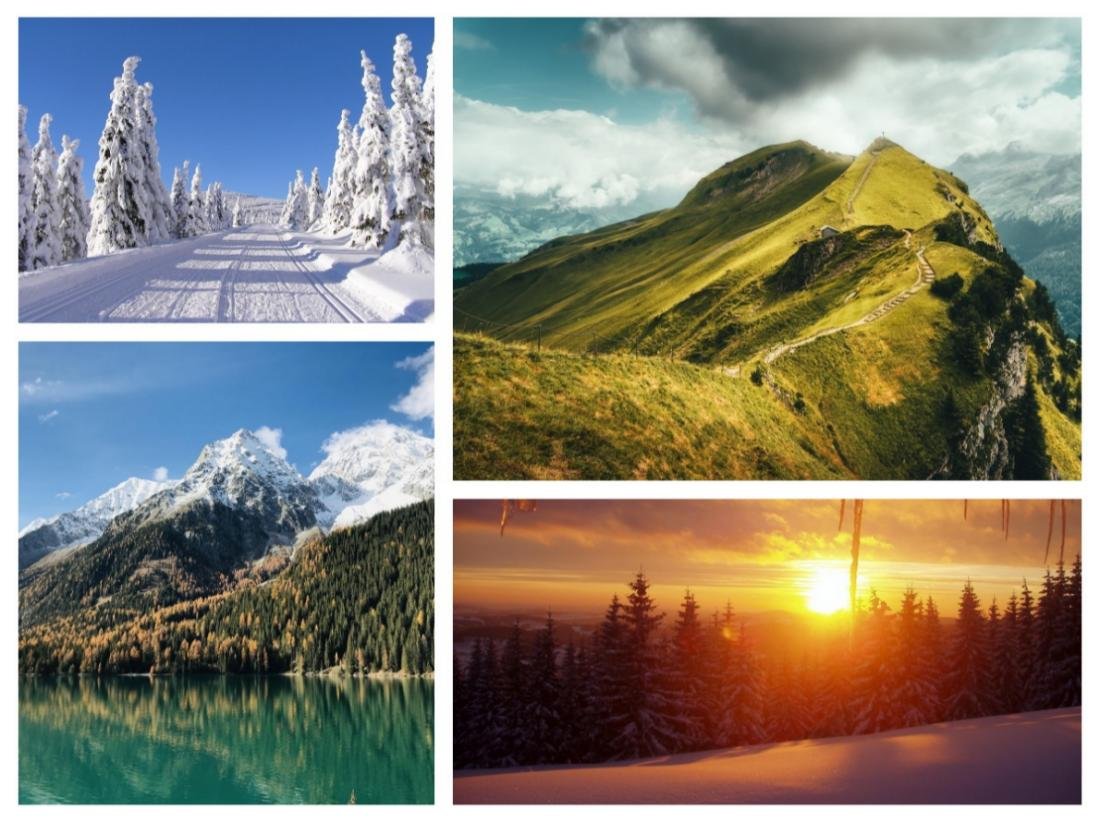
Landscape photographers typically go out during the golden hour (after sunrise and before sunset) to capture the beautiful interplay of blue and orange in the sky. We recommend that you take some time to understand the characteristics of light at different times of the day so you can plan your shooting schedule accordingly. You might find that you prefer a particular time of day for photography.
(6)Using a filter
Landscape photographers typically use two types of camera lens filters to improve image quality. One is a polarizing filter, which controls reflections, suppresses glare, and darkens the sky to a deep blue, making clouds more prominent. The other is a neutral density filter (ND filter), which reduces the amount of light entering the lens, allowing for slower shutter speeds, larger apertures, and/or higher ISO levels without overexposing the image.
Polarizing filters can instantly enhance the colors and overall look of landscape photos. ND filters may require some time to get used to before you can fully utilize them in common landscape photography techniques. If you have a limited budget, it’s recommended to purchase a circular polarizing filter first, and then upgrade to an ND filter to enjoy motion blur effects and capture silky smooth streams.
(7)Release using shutter speed
Many landscape photography beginners may often forget to bring an accessory, but many professional photographers recommend that you keep a shutter release device in your camera bag, which is very convenient when you can’t use a high shutter speed. By connecting this small remote control or wired device to your camera, you won’t have to touch the camera during long exposures, eliminating the worry of camera shake causing blurry images when pressing the shutter button.
(8)Create meaningful works
The best professional landscape photography technique you can learn is to focus on your composition. Even the same basic scene, photographed from slightly different angles, can produce dramatically different results. Fortunately, there are several composition techniques and rules you can follow (and occasionally break) to ensure your photos engage the viewer and convey the message you intend.
Some of the most common techniques include simplification, determining the correct image orientation based on the scene, following the rule of thirds, using leading lines, and incorporating a sense of balance into the image. Once you become familiar with these techniques, your photos will noticeably improve and become more engaging.
(9)Make sure your focus is on the important things
Part of composition involves ensuring accurate focus on the main subject. In most cases, this means making the subject sharp and clear, while blurring the rest of the image sufficiently to make the subject stand out.
What’s the key to achieving this? Keeping the lens aperture wide open, ideally using an aperture of f/2.8 or larger, to achieve a shallower depth of field. Landscape photographers typically focus either on the foreground or the background. They don’t tend to focus on smaller parts of the frame as much as other types of photographers do.
Set the focus (or multiple focus points) by selecting the focus point in the viewfinder or using the manual focus ring on the lens.
Shooting in aperture priority mode allows you to explore the best aperture settings to achieve ideal photo results. Remember that a larger aperture results in a shallower depth of field, while a smaller aperture results in a greater depth of field. To achieve the sharpest focus in most scenes, it’s recommended to shoot with a relatively narrow aperture. F/11 is often a good starting point for landscape photography; understand if this aperture value works for you and adjust as needed.
(10)Contains interesting foreground elements
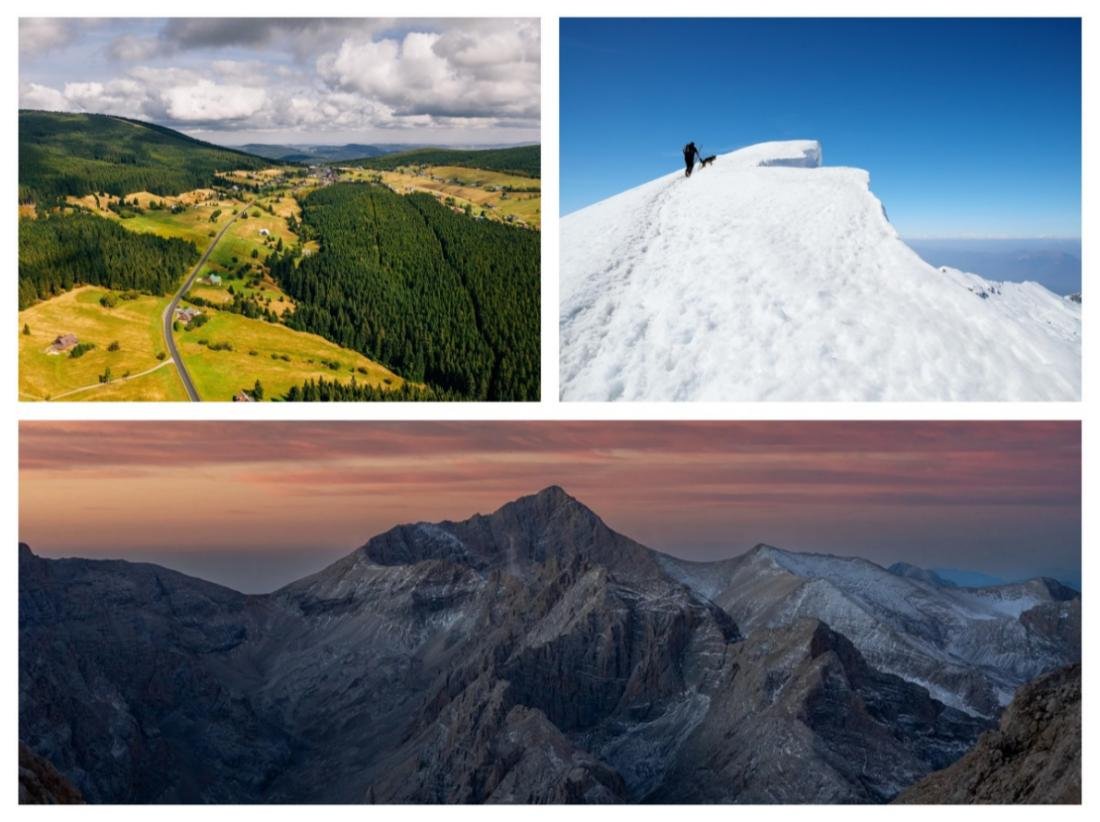
One problem with many landscape photographs is that the main subject is far away, and there’s nothing interesting in the foreground. This can make landscape photos look monotonous and boring, which is exactly what we want to avoid. When admiring some stunning scenery, pay attention to nearby rocks, plants, or even puddles; they can add interest to the image and create a stronger sense of depth.
Using a wide-angle lens, you can get very close to the foreground subject while still maintaining sharpness, but the background will become less prominent. Try moving far enough away from the foreground subject so that the landscape still retains its important features.
(11)Shoot in RAW format
For best results, shoot in RAW image format instead of the common JPEG format. When choosing between RAW and JPEG formats, RAW photos retain all image information, helping you capture higher-quality images (as clear as digital film). JPEG, on the other hand, compresses the file, reducing the amount of image data.
You need to have easily editable RAW files to perform color enhancement, white balance correction, and other necessary digital adjustments until you achieve the desired result. By selecting RAW as one of your preferred camera settings, you will have the flexibility to handle the post-processing workflow for landscape photography.
(12)Unleash your creativity
If you tend to photograph the same locations and landscapes as everyone else, you’re likely to end up with the same photos as everyone else. So, how do you make your photos stand out? Besides using proper exposure and ensuring sharpness and blur in all the right places, one thing that will make your photos stand out is your creativity. Instead of simply capturing the scene in front of you, think about how to tell a story or find a way to offer a different visual experience. Many full-time landscape photographers utilize various such ideas to make their work unique.
(13)Image post-processing
Image post-processing programs such as Adobe Photoshop and Lightroom are commonly used for professional-level photo editing. You can use them to import RAW images and perform various edits on your photos. If you’re not proficient in photo editing, there are plenty of photo editing and processing tutorials available online.
Remember, if you don’t master proper camera lens cleaning techniques, you may end up spending extra time in post-processing removing dust particles, smudges, and glare.
(14)Explore and improve
With the right tools and learning resources, you can learn various photography styles. With these skills, you can practice landscape photography and gain more experience.
But don’t stop there—challenge yourself by blending landscape photography with other styles. Consider exploring different photography techniques and other genres of photography, and strive to find the techniques and conditions that best suit your needs.
Ultimately, you’ll find that you’ve perfectly mastered your favorite landscape photography methods. With time and experience, you may even come to consider your work a form of art. Like all art forms, photography is a continuous learning experience. It will give you a brand new pair of eyes, allowing you to observe and appreciate the world from a completely new perspective.
(15)Change your focus
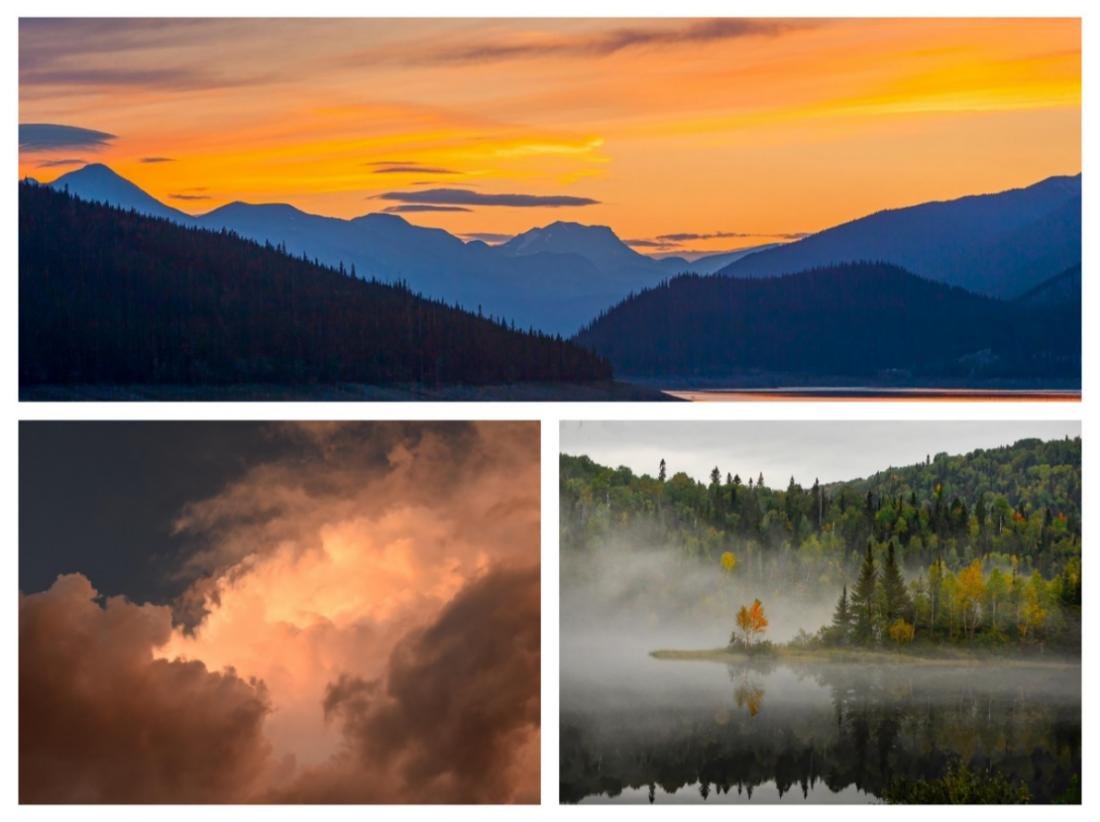
Changing the focus can be understood in two ways. Firstly, you can interpret it literally, changing the element in the photograph that you want to be in focus. For example, learning hyperfocal distance rules or focusing on one-third of the scene. Trying advanced techniques such as focus stacking to maximize depth of field also falls into this category. In landscape photography, there are many places you can focus on – you just need to use them cleverly.
Changing the focus can also be understood as changing the subject of the photograph. For example, you might want to incorporate human elements into landscape photography. This can include figures, buildings, vehicles, and structures such as docks and bridal veils. They add a sense of scale, juxtapose nature with human elements, and give you a different visual narrative.
(16)Come a little closer
Finally, we want to remind and encourage you to explore other environments, cultures, and locations. Of course, you should do so safely, adhering to local guidelines and following the “leave no trace” principle. Landscapes vary from place to place and from country to country.
For example, within the United States, you have the colorful rocks and deserts of the Southwest, the lush greenery of the Pacific Northwest, the vibrant autumn colors of the Northeast, and the beautiful swamps of the Southeast.
Traveling allows you to practice your landscape photography skills and test your equipment in different environments and weather conditions. You’ll gain valuable experience, such as the practicality of weatherproof gear, the convenience of charging devices with a power bank, and how to deal with lens fogging.
(17)Deep games
Many people will tell you that landscape photography is characterized by ultra-wide-angle images that showcase a vast perspective. While this is important in many cases, stunning landscape photos can also be taken using telephoto lenses with longer focal lengths. The important thing is not to categorize landscape photography into any one type, but rather to focus on another crucial characteristic: depth of field.
If landscape photographs lack depth of field, they fail to tell a true story and cannot showcase the unique layers, textures, and characteristics of the landscape. Whether shooting wide-angle or close-up shots, adjusting camera settings is crucial for successfully capturing strong depth of field.
What’s the best method? Use a higher aperture value when shooting, which reduces the aperture diameter and thus increases the depth of field. If lighting conditions allow, try to stay between f/7.1 and f/16. This will give your photos a more dramatic depth-of-field effect, which is a key element in landscape photography.
(18)Display ratio
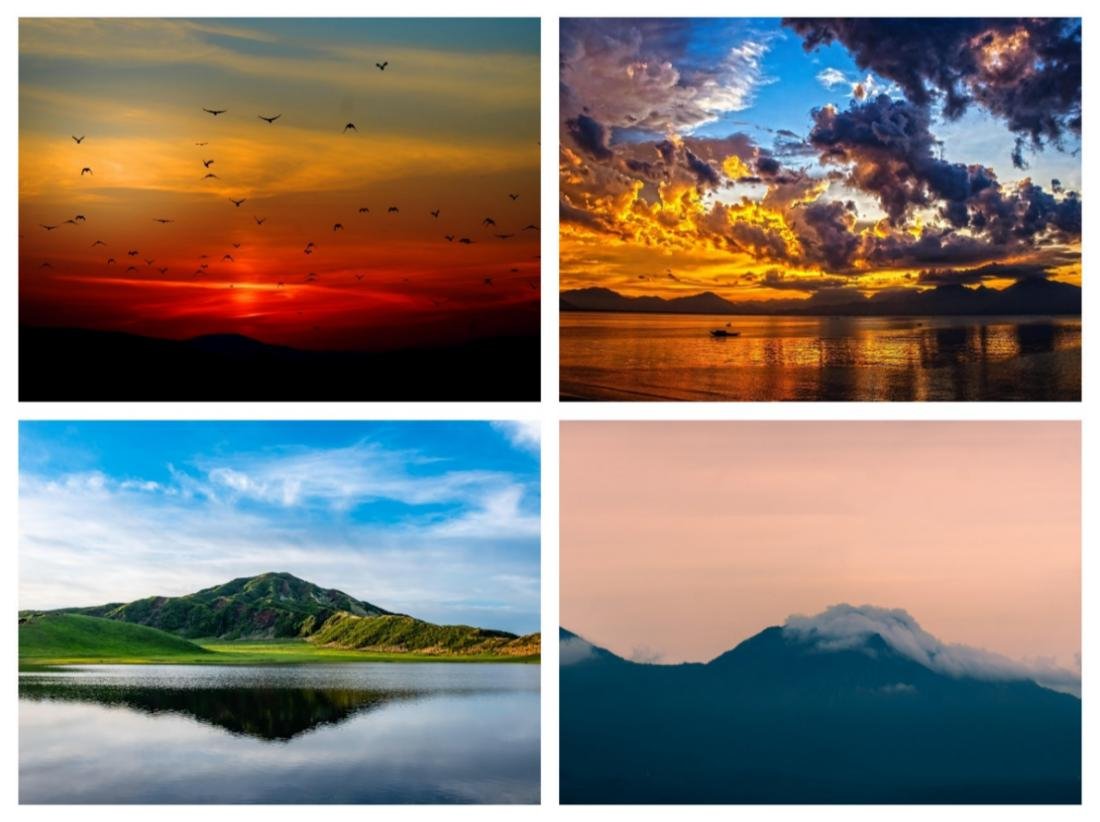
Although the scenery itself is beautiful, showcasing accurate and dramatic proportions, especially in relation to human subjects, is a very powerful tool.
This definitely takes time to master, because taking a successful photograph requires careful observation of the subject’s position. You certainly don’t want your subject to be lost in the shadows of the landscape. Instead, you should frame and highlight them with the bright sky, landscape, or sunlight.
Once you’ve mastered positioning your subject, you can experiment with different techniques, from using wide-angle shots to capture vast landscapes with small figures, to using telephoto lenses to compress the landscape and add a powerful perspective to the image, making the background scenery appear closer and revealing rich and beautiful details.
(19)Pay attention to the sky
Composing a landscape photograph means deciding how to handle the sky. Finding the right balance between land and sky is often the highlight of a landscape photo, and this largely depends on the appearance of the sky in a given situation.
A clear blue sky, beautiful white clouds, or even dramatic storm clouds can all enhance your image, and you might consider using more of the sky and less of the land. You can even use a polarizing filter to deepen the blue and enhance the contrast with the white clouds.
However, if the sky is a uniform dark gray, it’s best to minimize its presence or even eliminate it entirely. Nothing ruins a landscape photograph more than a blank white area replacing the original sky.
(20)Capture contrast
While this also depends on the photographer’s editing style, contrast is crucial when photographing landscapes. Whether it’s the contrast between a beautiful blue sky and a desert landscape, or the contrast between a lush temperate rainforest and the turquoise sea, you need to be able to capture images that reflect the striking contrasts within the scenery.
A polarizing filter is an excellent tool for capturing this contrast. Typically screwed onto the front of the lens, it significantly and progressively enhances contrast based on the photographer’s manual adjustments. It also reduces glare or reflections that might appear in the image, meaning you have better control over the picture when shooting with a polarizing filter.
(21)Using water reflection
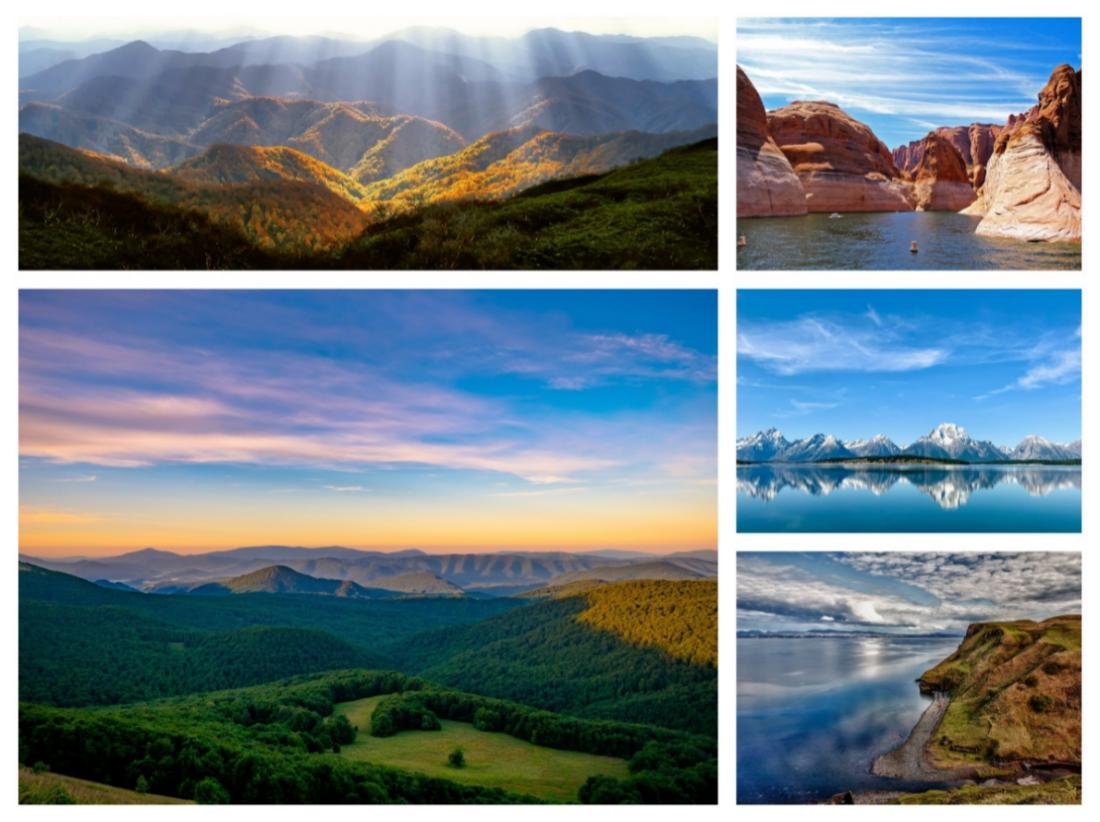
Water is an extremely important compound, especially in landscape photography. When shooting outdoors, bodies of water can provide two important elements: movement and reflections.
Water can add dynamism to a landscape. Whether you’re photographing a waterfall or a babbling brook, if you have a tripod, you can set your camera to a slower shutter speed (approximately 1-3 seconds) and observe how the camera captures the smooth movement of the water. This sense of motion contrasts beautifully with the sharp, still landscape, making for a stunning image.
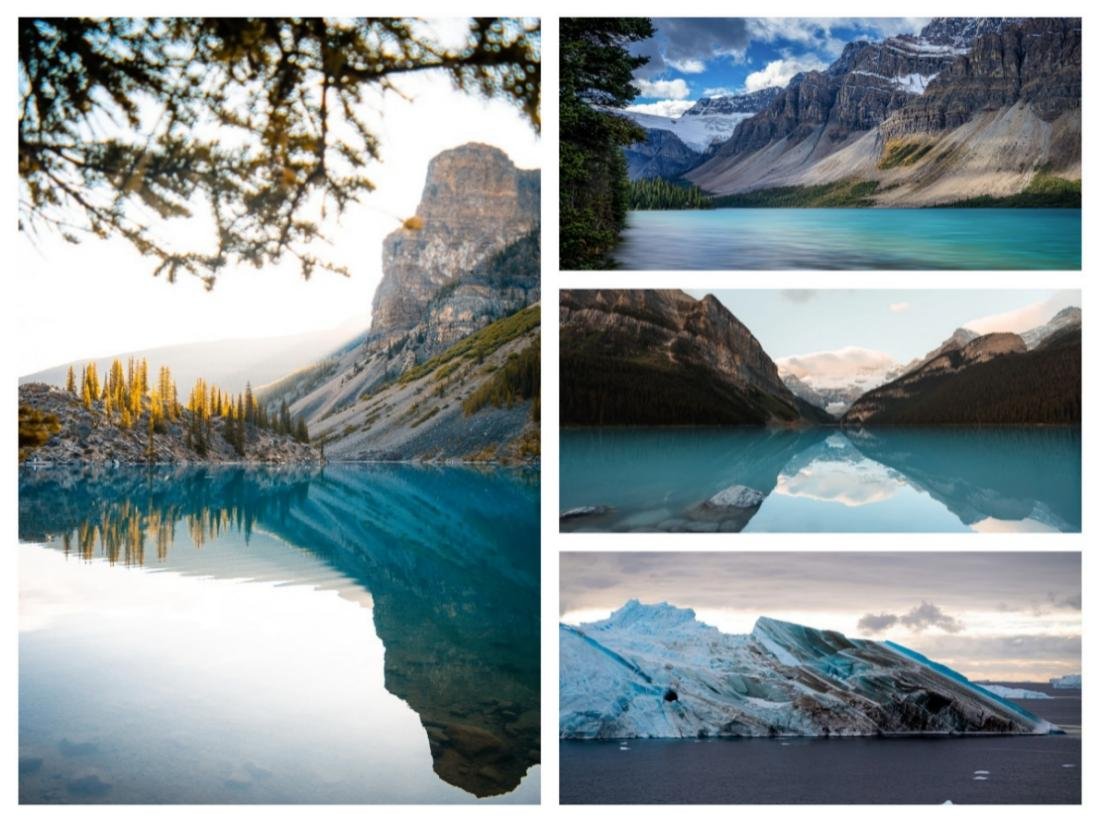
Water also provides opportunities for reflections, creating incredibly beautiful effects when photographed, making it very popular in landscape photography. Calm lakes or streams reflecting the surrounding scenery produce unparalleled results. To achieve this effect, it’s best to photograph in the early morning or late evening, before the wind picks up or after it has died down.
Please remember: if you do purchase a polarizing filter to increase contrast, as mentioned above, be aware that they will also neutralize reflections. Therefore, be sure to adjust accordingly when photographing reflections on water and using a polarizing filter.
(22)Don’t fall into “framework paralysis”
This is a problem for beginner photographers, and even many professionals. Many photographers conduct extensive research and invest a great deal of time and effort into capturing a specific image or shot they have in mind, sometimes becoming fixated on successfully capturing that particular image.
However, on the day of the shoot, the weather may be bad, or the lighting may not achieve the effect you planned. It’s important not to become so fixated on your preconceived idea that you miss the opportunities around you.
Patience is crucial in landscape photography, but you should also be prepared to take multiple shots and always remain flexible. When shooting in the field, be constantly aware of your surroundings, observing where the light falls and how the scenery changes. Don’t focus too much on getting “the one perfect shot” and miss out on ten other great photos around you.
This is why it’s crucial to take the time to scout the shooting location and understand the surrounding environment, so that when the time is right and you’re ready to shoot, you can be constantly aware of the opportunities around you. While preparation is important, don’t over-prepare to the point of becoming paralyzed by indecision.
